
Top Most Asphalt Batching Plant Exporter in India
Asphalt batch mix plants manufactured by Mewad Equipments are popular with contractors on highways, urban roads, airports and mega-infrastructure projects due to their durability, efficiency and minimum maintenance. Mewad Equipments is a reliable Asphalt Batch Mix Plant Manufacturer that provides high-quality asphalt batch mix plants engineered to manufacture high-quality asphalt of any nature, according to the requirements of any kind of road construction job.
Our plants include automated controls, efficient drying drums, vibrating screens, large capacity hot bins, and strong mixers that provide the precise grading, ideal temperature control, and equal mixing. We are highly dedicated to innovation and reliability, and have tailored solutions of asphalt batch mix which can be used to serve long-term high-strength road surfaces.
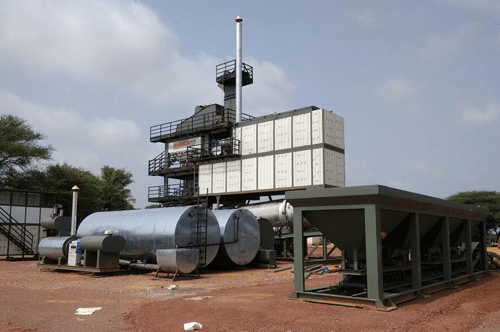
High-Capacity 80-200 TPH Asphalt Batch Mix Plants Supplier - Mewad Equipments Ahmedabad
For the fast process, the second batch of aggregates can be heated by mixing with the first batch of aggregates. The plant contains independent variable drives and electric motors. Ideal automation is exhibited through the effective procedure of asphalt batching plant exporter. Burners are provided to the dryer. Vibratory screens help to examine the procedure. Hot aggregates are stored in specially built hoppers.
Our asphalt mix plants are proven efficient and fast plants with specially designed equipment and fully computerized controls. The PLC-based system contains digital displays and all required safety systems. A complete system for pollution control helps the plant to run efficiently. Hot mix silos are provided with level indicators and discharge doors.
Specifications & Capacities of Asphalt Batch Mixing Plant
| Model | Capacity (TPH) | Cold Feed Bins | Mixer Capacity (kg) | Total Power (kW) |
| MBP-80 | 80 | 4 x 12 m³ | 1000 | 220 |
| MBP-120 | 120 | 4 x 15 m³ | 1500 | 320 |
| MBP-160 | 160 | 6 x 15 m³ | 2000 | 450 |
| MBP-200 | 200 | 6 x 18 m³ | 2500 | 550 |
Product Overview
- Economic design
- Rapid function
- Highly economic
- Energy efficient
- Suitable for less requirements
- Fully automatic
- Microprocessor-based control
- Air conditioned control cabin
- Highly economic
- Rapid function
- Help to stay competent
- Best Productivity and Profitability
- Exceptional and unmatched
- Fully automatic
- According to international norms and conditions
Key Features of an Asphalt Batch Mix Plant
Several cold aggregate feeder bins balance and feed aggregates of different sizes so that the mix is consistent as required by the mix design requirements.
Aggregates are dried in a drying drum within a short time and mixed uniformly via a burner that eliminates the moisture and enhances the mixing quality.
The weighing of aggregates, filler, and bitumen prior to mixing is accurate using load cells, leading to increased quality control and homogeneous batches of asphalt.
The advanced vibrating screens are used to separate and screen the hot aggregates and grade them correctly, so that they are properly sized to produce first-rate pavement.
This combines a mix of hot bins, weighing systems, and a pugmill mixer and mixes all the ingredients thoroughly to form a homogenous asphalt mix that can be used depending on the grade of the road.
Designated, temperature-controlled bitumen and minerals hoppers, each with dedicated weighing systems.
The dust emissions are captured using state-of-the-art bag filters, which assist the plants in meeting the environmental requirements and provide a clean worksite.
In contemporary plants, the fully automated PLC and SCADA systems enable real-time monitoring and control to guarantee the accuracy and efficiency of the process and also a steady output.
Each batch of recipes can be varied, which helps to adjust to the needs of each project involving asphalt production and use material recycling when necessary.
The design enables a large production capacity with mix uniformity and quality that is fundamental in large infrastructure projects.
How Asphalt Batch Mix Plant Works?
1. Storage and Feeding of Raw Materials
The different aggregates, like stones, sand, and gravel of various sizes, are kept in different bins. A feeder system is used to make sure that the right quantity of all materials is supplied to the plant continuously. This will ensure a constant supply of raw materials for constant production.
2. Aggregate Drying and Heating
Aggregates usually have some moisture and can decrease asphalt bonding. The aggregates are heated in the drying drum by a burner (diesel, LDO, or gas-fired) and the moisture is removed. The aggregates are uniformly heated to ensure that they are prepared to mix with bitumen.
3. Screening and Separation
These aggregates are then heated and sorted through vibrating screens that separate the aggregates by size. The properly graded aggregates are then stored in hot bins and mixed. This measure will guarantee that the final asphalt mixture is made up of a uniform composition.
4. Weighing and Proportioning
Accurate weighing of aggregates, bitumen, and fillers (e.g., stone dust or lime) are required to sustain the quality of the asphalt mix. Automated weighing systems can guarantee correct proportions of each batch, minimize errors, and enhance efficiency.
5. Mixing of Materials
In batch plants, mixing is in batches, whereas drum mix plants are continuous. The aggregates, bitumen and fillers are mixed in their entirety to create a homogeneous asphalt mixture that is fit to be paved.
6. Bitumen Heating and Storage
Bitumen is kept in insulated or heated tanks to keep the temperature optimum. It is added to the mixer at the appropriate temperature to produce a uniform coating on aggregates, which yields smooth and high-quality asphalt.
7. Dust and Pollution Control
The contemporary asphalt batch mix plants have baghouse filters or scrubbers to trap dust, smoke, and other emissions. This guarantees environmentally friendly operation and adherence to the regulations of pollution control.
8. Storage and Dispatch of Final Mix
The ready hot mix asphalt is kept in silos where the temperature is maintained until the asphalt is loaded onto trucks. The asphalt is then moved to the paving location to construct or resurface the road.
Benefits of Asphalt Batch Mix Plants
- Highways, airports, and urban roads quality control through batch mixing of the drum plants.
- Gradation of stronger, longer-lasting pavements.
- Accurate bitumen and aggregate proportions will save 15 % of waste.
- Flexible in the type of mix (SMA, mastic asphalt).
- Better ROI: The more output, the faster the project is completed.